At Castle Primary School, we believe that geography is the study of places and the relationships between people and their environments. Geography enables children to understand the world around them, from their local community to the wider globe, whilst developing an appreciation of the physical and human processes that shape our planet.
Our geography curriculum is built around the teaching of both substantive knowledge (what pupils know about places, environments and geographical processes) and disciplinary knowledge (how pupils think and work as geographers). Through enquiry, investigation, map work and fieldwork, pupils learn to ask questions, analyse evidence, interpret information and draw conclusions about the world around them.
We have carefully designed a spiral curriculum that enables pupils to revisit and deepen their understanding of key geographical concepts throughout their time at Castle Primary School. In Key Stage 1, pupils begin to explore the concepts of Place, Environment, Maps and Directions, People and Connections, and Care for the World. In Key Stage 2, learning is organised around nine key geographical concepts: Boundaries, Cartography, Change, Climate, Interdependence, Movement, Physical Geography, Resources and Settlements. These concepts provide the lens through which pupils study different locations, environments and geographical issues, allowing them to make increasingly sophisticated connections between their learning over time.
Geographical enquiry is at the heart of our curriculum. Each unit is driven by meaningful questions that encourage curiosity, critical thinking and investigation. Pupils are taught to use a range of geographical tools and sources, including maps, atlases, aerial photographs, data and fieldwork, to develop their understanding and communicate their ideas effectively. Through carefully planned opportunities for retrieval, pupils revisit prior learning and vocabulary, strengthening understanding and supporting long-term memory.
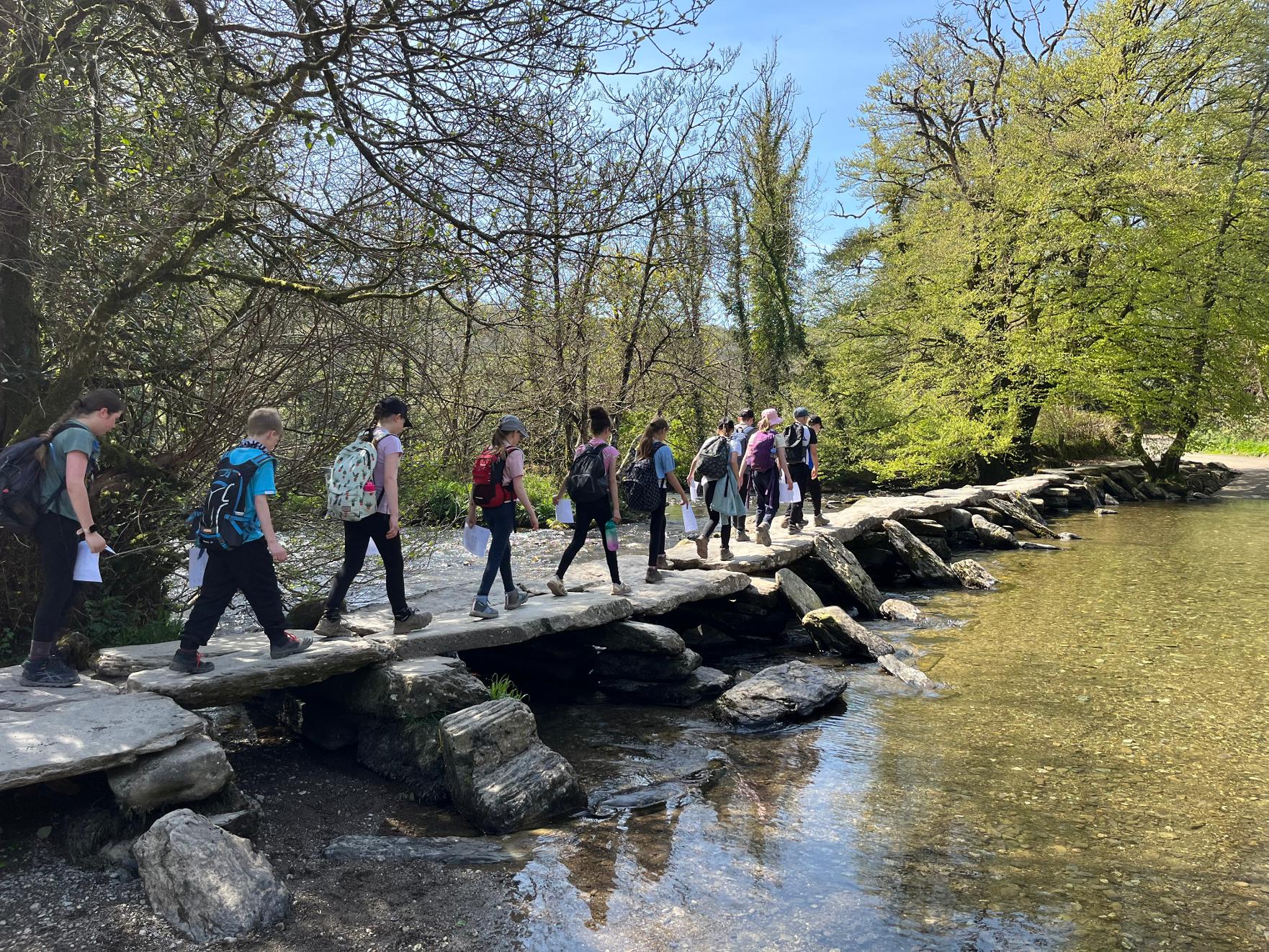
We believe geography should be experienced as well as studied. Wherever possible, pupils engage with geography beyond the classroom through fieldwork, educational visits and exploration of the local community. By investigating their local area and comparing it with locations across the United Kingdom and the wider world, children develop first-hand geographical understanding through practical enquiry. We are proud to provide opportunities for pupils to apply their geographical skills in real-world contexts, including participation in the Exmoor Challenge, local fieldwork investigations and orienteering experiences in Upper Key Stage 2. These experiences develop navigation, map-reading and decision-making skills whilst fostering a deeper appreciation of the landscapes, environments and communities that surround us.
Vocabulary development is carefully planned and sequenced throughout the curriculum. Pupils revisit and apply previously taught geographical vocabulary whilst acquiring new subject-specific terminology, enabling them to discuss geographical concepts and processes with increasing confidence and accuracy.
Through the study of local, national and global geography, pupils develop an understanding of the interconnected nature of the world and their place within it. They learn about the relationships between people and environments, the impact of human activity, and the challenges and opportunities facing communities around the world.
By the time pupils leave Castle Primary School, they will:
Have a secure understanding of key geographical concepts, knowledge and processes.
Think and work as geographers through enquiry, investigation and analysis.
Use maps, fieldwork and a range of geographical sources confidently and effectively.
Apply precise geographical vocabulary to explain and communicate their understanding.
Understand how people, places and environments are connected at local, national and global scales.
Recognise their role as informed, responsible and environmentally aware citizens.
Appreciate the value of their local area and understand how it connects to the wider world.
Ultimately, our geography curriculum aims to inspire curiosity about the world, foster a sense of responsibility towards people and places, and develop pupils who are equipped to understand and engage thoughtfully with the geographical challenges and opportunities of the future.

|
Castle Geography Skills Progression | [docx 85KB] |

|
|
|
Sample Geography MTP UK vs Italy | [docx 254KB] |
|